Nissan Gravite : Nissan has kicked off a fresh chapter in India with the launch of the all-new Gravite, a seven-seater MPV aimed squarely at family buyers who want space, practicality, and a strong value proposition.
The model arrived on 17 February 2026 with an introductory price of Rs 5.65 lakh, making it one of the most attention-grabbing launches in Nissan’s recent India strategy.
The Gravite is not just another addition to the lineup. Nissan says it is the first product under its renewed India product offensive, a move designed to rebuild momentum in a market where the brand has had a relatively narrow portfolio in recent years.
A Fresh Identity for Nissan
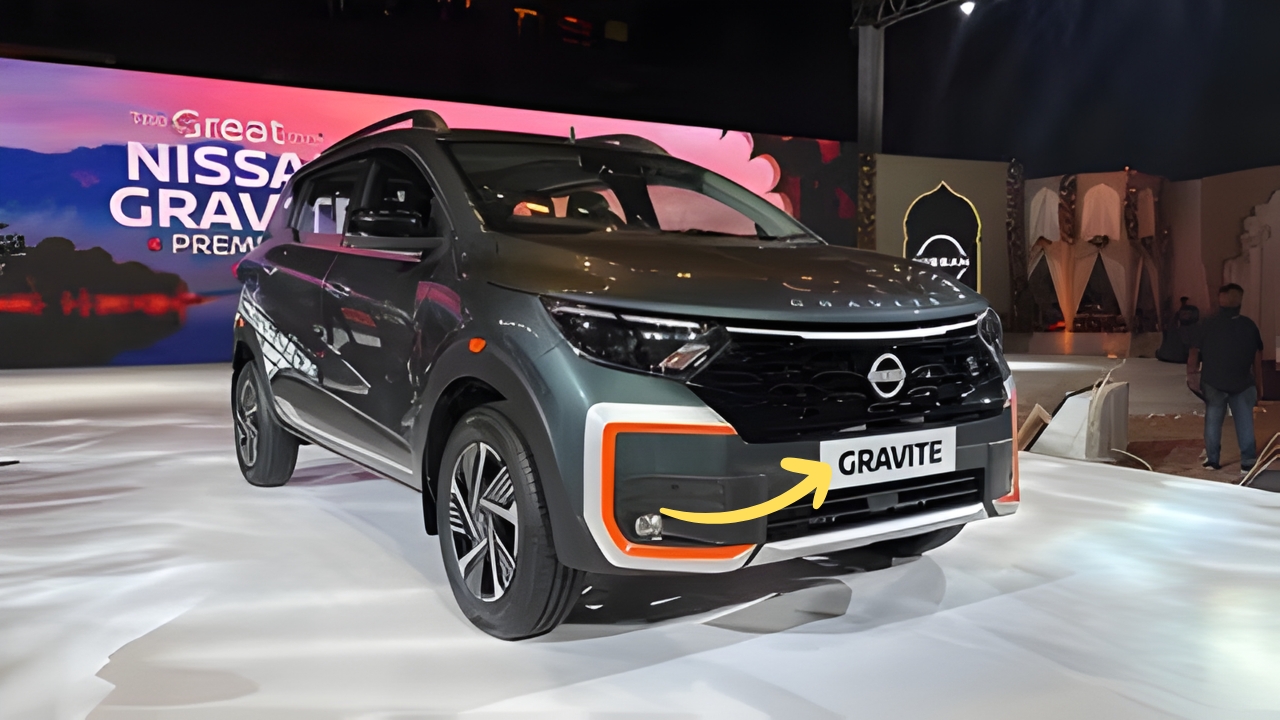
The Gravite carries Nissan’s familiar design language, especially the bold C-shaped front and rear theme that helps it look unmistakably like a Nissan.
The company has also given the MPV distinct hood branding and rear-door badging, a small but important touch that helps it stand apart from the more familiar donor platform underneath.
At first glance, the Gravite appears built for Indian road conditions and Indian family use. Nissan highlights its muscular body lines, elevated stance, pronounced wheel arches, and high ground clearance as part of the model’s practical but confident personality.
That design direction matters because buyers in this segment often want a vehicle that feels more premium than a basic people mover, even if the focus remains on utility.
Also Read: Toyota Innova Hycross Fabulous design MPV with panoramic sunroof and advance safety features
Space and Flexibility
The strongest part of the Gravite story is cabin flexibility. Nissan says the MPV offers seating configurations from two to seven occupants, with modular seating aimed at daily commuting, school runs, airport duty, and family trips. The third row can be removed, which gives owners more luggage room when they do not need every seat.
Boot space figures are particularly useful here. With the third row removed, the Gravite can offer up to 625 litres of luggage space in a five-seater setup.
That kind of flexibility is one of the model’s biggest strengths, especially for families who regularly juggle people, bags, groceries, and weekend luggage.
Inside, Nissan has focused on comfort as much as packaging. The cabin gets a dual-tone theme, layered storage spaces, cooled compartments, and 3-row air-conditioning vents for better airflow across the vehicle. These are the sorts of features that matter more in real ownership than flashy brochure claims.
Features That Fit Daily Use
The Gravite also brings in a modern feature set to keep it competitive in the compact MPV space. Nissan lists a floating 20.32 cm infotainment screen with wireless Android Auto and Apple CarPlay, a digital instrument cluster, wireless charging, and conveniences like walk-away lock and approach unlock.
For a family-focused product, these touches make sense. They reduce clutter, improve convenience, and give the Gravite a more contemporary feel than many budget-oriented MPVs.
The launch edition goes a step further with items such as JBL speakers, a dual dash cam, an air purifier, ambient lighting, and comfort add-ons like neck and lumbar cushions.
Also Read: Apache RTR 310 2026 Fantastic design motorcycle comes with 5 inch TFT display, mileage is 35kmpl
Safety as a Selling Point
Nissan is also pushing safety hard with the Gravite. The company says the MPV includes more than 30 standard safety features, among them six airbags, ESC, traction control, hill-start assist, brake assist, ABS with EBD, and seat-belt reminders for all occupants.
That safety messaging is important in India, where family buyers are increasingly paying attention to crash protection and active safety tech.
By making these features standard, Nissan is clearly trying to position the Gravite as a thoughtful, family-first product rather than a stripped-down entry-level mover.
Engine and Driving Character
Under the hood, the Gravite uses a 1.0-litre, 3-cylinder naturally aspirated petrol engine producing 72PS and 96Nm, paired with either a 5-speed manual or 5-speed EZ-shift AMT. Fuel efficiency is quoted at 19.3 km/l for the manual and 19.6 km/l for the AMT.
This is not a performance-focused setup, and it was never meant to be. Instead, the Gravite is tuned for easy urban driving, light steering effort, predictable performance, and low running costs. That makes it a sensible choice for buyers who value practicality over outright power.
Pricing and Variants
Nissan has kept the pricing structure broad enough to appeal to different buyers. The Gravite is offered in multiple trims, starting from Visia and moving through Acenta, N-Connecta, and Tekna, with both manual and AMT versions available in higher trims.
The opening price of Rs 5.65 lakh creates a strong headline, especially in a segment where value is critical. Nissan is also offering a limited launch edition and a five-year complimentary service offer for early bookings, which adds extra appeal for first-wave customers.
Also Read: Skoda Superb 2026 Luxury features sedan comes with 10 safety airbags, boot space is 645L
Why It Matters
The Gravite matters because it gives Nissan a more complete India story. For a brand that has often been seen as too dependent on a single model, a new seven-seater MPV broadens its reach and helps it connect with a larger family-car audience.
It also signals that Nissan is serious about building a longer-term presence in India, with more products promised after the Gravite.
The company’s roadmap includes the Tekton mid-size SUV in mid-2026 and a seven-seater C-SUV in early 2027. In that sense, the Gravite is less about one launch and more about a wider brand reset.
Nissan Gravite Final Take
The Nissan Gravite is not trying to be a flashy lifestyle MPV. It is trying to be a smart, practical, family-friendly one with enough design flair and features to feel modern.
Also Read This : Ather 450X 2026 161km range scooter comes with 7 inch TFT display, look is stylish
If Nissan can maintain competitive pricing and keep ownership costs under control, the Gravite could become an important volume product in its India revival.